About the Book
CI/CD is more than pipelines and automation. This book explores the engineering, technical, organizational and cultural anti-patterns that often sit behind broken builds, slow feedback and unreliable delivery—and the practices that can help teams improve.
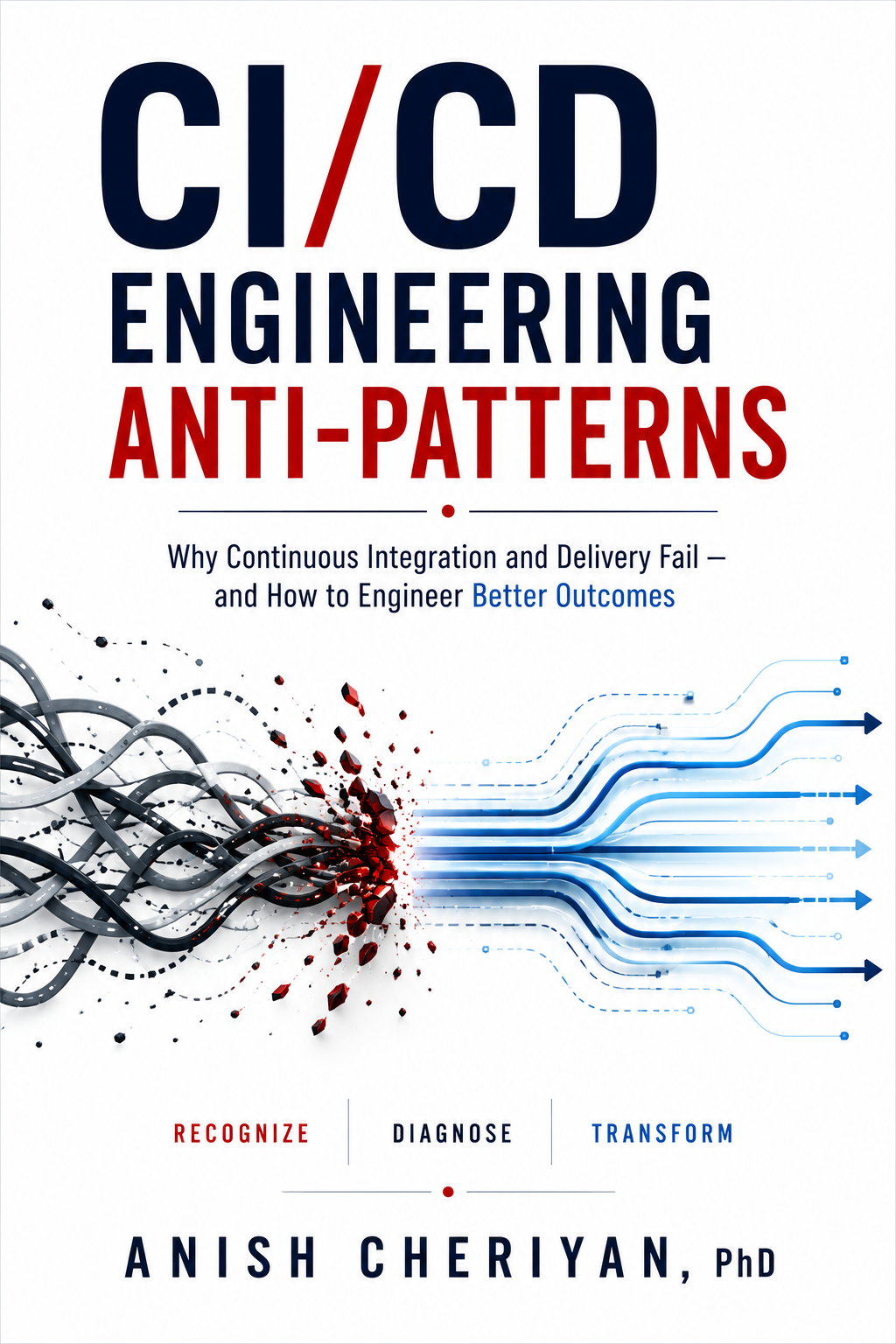
Continuous Integration and Continuous Delivery have been part of software engineering for decades. Today, we have better tools, faster infrastructure, cloud platforms, sophisticated automation, DevOps practices and AI-assisted engineering. Yet many organizations still struggle with unstable builds, slow feedback, late integration, unreliable tests, technical debt and fragmented ways of working.
Why?
That question is at the heart of CI/CD Engineering Anti-Patterns: Why Continuous Integration and Delivery Fail - & How to Engineer Better Outcomes.
One of the central ideas of this book is that CI is more than a pipeline.
Think of a fever. The fever is visible, but it may only be a symptom of something deeper. Continuous Integration behaves in much the same way. A broken build may be visible, but the underlying cause could be poor requirement decomposition, weak architecture, large changes, inadequate testing, flaky automation, branching complexity, technical debt, unclear ownership, poor collaboration or engineering culture.
CI makes these deeper engineering problems visible. Improving CI/CD therefore often means improving the engineering system behind it.
Rather than presenting another collection of best practices, this book examines recurring anti-patterns that prevent teams from achieving the outcomes they expect from CI/CD. They span requirements, architecture, development, testing, automation, software supply chains, observability, management, culture and AI-assisted engineering.
The book also recognizes that there is no universal best practice. Every organization, product and team has a different story. The objective is not to blindly copy what worked elsewhere, but to understand the principle, recognize the anti-pattern and adapt the solution to your engineering context.
AI adds another important dimension. It can accelerate requirements, coding, reviews, testing, debugging and operations, but it cannot repair weak engineering foundations by itself. The opportunity is to combine AI, automation and human engineering judgment to build better engineering systems.
Built on my doctoral research in CI/CD, years of industry experience, open-source engagement and interactions with the wider engineering community, this book brings research and practical observations together.
It is designed as a companion for the CI/CD journey. Readers can start with the problem they face—flaky tests, slow integration, architecture, culture or release confidence—and follow the relevant anti-patterns.
Continuous Integration is not merely about integrating software continuously. It is about continuously improving the engineering system that creates the software.